Choosing the right shipping method for the Canton Fair can be challenging. Each option has distinct advantages and disadvantages. Understanding "how to choose between airfreight and seafreight" can help streamline your logistics.
Airfreight is faster, ideal for urgent shipments. If you're racing against time to get products to the fair, airfreight might be the best choice. However, it is generally more expensive. On the other hand, seafreight is cost-effective for larger volumes. It might suit businesses with more time and less urgency.
Consider additional factors as well. Customs clearance and potential delays can complicate airfreight. Seafreight requires planning and can take weeks. The nature of your products plays a role too. Fragile items may fare better with air transport. Reflect on your priorities and constraints to make an informed decision.
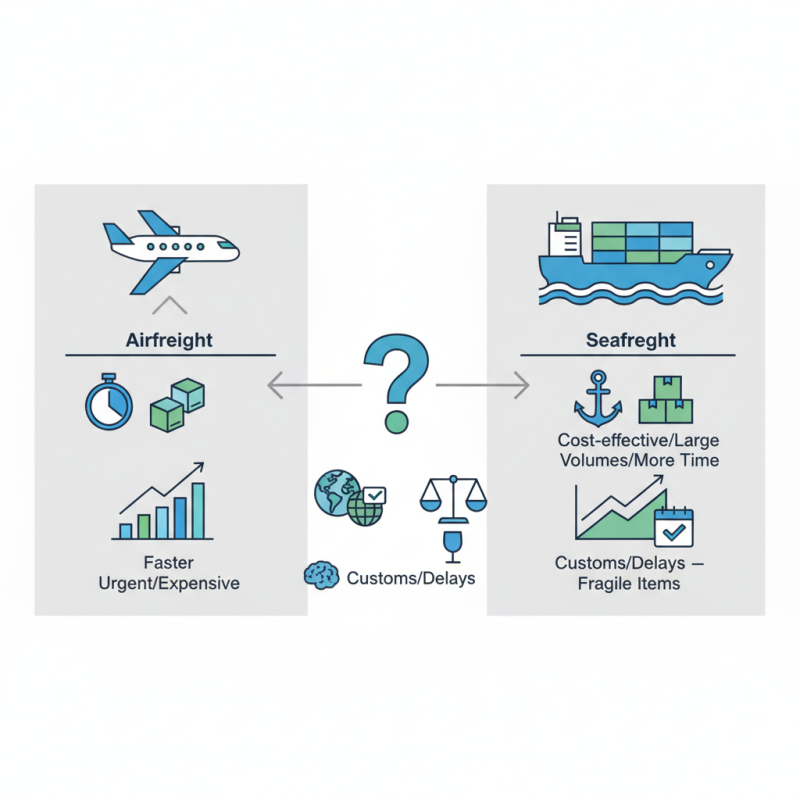
When choosing between airfreight and seafreight for the Canton Fair, it's vital to understand their differences. Airfreight is faster. Goods can arrive within days, making it ideal for urgent shipments. This speed, however, comes at a higher cost. Air travel is not always cost-effective for large shipments.
On the other hand, seafreight is slower but more affordable. It can take weeks for goods to reach their destination. This method works well for bulky items or when timing is flexible. However, delays can happen due to weather or port congestion.
Both options have pros and cons. Airfreight offers speed, but can be tricky if your budget is tight. Seafreight saves money, but it's risky if you need quick delivery. Ultimately, weigh your priorities. What matters more: cost or speed? This decision can impact your Canton Fair experience significantly.
When evaluating shipping methods for the Canton Fair, several factors come into play. Airfreight is significantly faster, usually taking 3-7 days. In contrast, seafreight often takes 20-40 days, depending on the destination. Speed can be crucial, especially for businesses aiming to meet tight deadlines. However, this efficiency comes at a higher cost, often around 5-10 times more than sea freight.
Cost efficiency is a major influence. According to industry reports, seafreight typically becomes more economical when shipping large volumes. For shipments exceeding 1000 kg, airfreight rates can skyrocket. In one recent analysis, businesses noted a 30% increase in shipping costs when opting for air over sea. It’s essential to evaluate your shipment size and budget closely.
Beyond speed and cost, cargo type also matters. Fragile or perishable goods often require airfreight to minimize damage. Items like textiles or machinery can typically endure the longer seafreight journey. However, when shipping electronics, both methods pose risks. High humidity at sea can damage sensitive components. Understanding your product specifics is key to making the right choice.
When considering your shipping options for goods at the Canton Fair, cost is a crucial factor. Airfreight is typically faster but often comes with higher costs. It's ideal for urgent shipments. On the other hand, seafreight is slower but cheaper, making it suitable for bulk goods. It's essential to calculate both costs accurately. Take into account packaging, insurance, and customs fees.
Tips: Always compare quotes from multiple freight forwarders. Even small differences can add up. Keep in mind that airfreight may require special handling for fragile items. Know the dimensions and weight of your packages. This will prevent unexpected fees.
In terms of timing, airfreight can save you precious days. However, seafreight requires more planning. Make sure to coordinate your timelines effectively. If your goods are not time-sensitive, seafreight might be the better choice. Reflect on your specific needs before making a decision.
Airfreight and seafreight are two main shipping options for businesses attending the Canton Fair. Time sensitivity is a key factor in choosing between them. If your products are time-sensitive, airfreight might be the better choice. It offers faster delivery, typically within a few days. This can mean the difference between catching a trend or missing it entirely.
Imagine you’ve developed a hot new product just in time for the fair. If you opt for seafreight, it could take weeks. You might lose potential buyers while waiting. Conversely, airfreight gets your goods to the fair quickly. This allows you to showcase your items at the peak of interest. However, the costs can be significantly higher. Weighing speed against budget is crucial.
Also, consider potential delays. Airfreight can face unexpected weather issues or customs holdups. This could mean you don’t receive your goods in time. Similarly, seafreight isn’t without its risks, like port congestion. Both methods have their pros and cons. Assessing your product type and audience is necessary before making a decision.
Time is of the essence at the Canton Fair, so choose wisely.
When preparing for the Canton Fair, choosing the right logistics option is crucial. Airfreight is faster but often more expensive. It may suit urgent shipments or high-value goods. Seafreight, while slower, is more cost-effective for larger volumes. Each option carries its pros and cons. Evaluating shipment needs is essential.
Managing the logistics process involves several best practices. Start by assessing deadlines. Understand production time and transit duration. Ensure suppliers are aware of your shipping method, as this can impact lead times. Create a timeline that incorporates buffer periods. Logistics can be unpredictable; delays may occur. Reflecting on past experiences can help improve this process.
Communication is key. Establish clear guidelines with your logistics providers. Confirm pickup and delivery dates. Regular updates can preempt issues. If challenges arise, be ready to adapt your plans. Logistics for the Canton Fair can be overwhelming. However, careful planning and adjustments lead to smoother operations.
: Airfreight is a shipping method that uses aircraft to transport goods quickly.
Airfreight usually takes 3-7 days to reach its destination.
Airfreight costs can be 5-10 times higher than seafreight, especially for large shipments.
Seafreight is a shipping method that uses ships for transporting goods over longer periods.
Seafreight generally takes 20-40 days to deliver goods, based on the destination.
Choose seafreight for bulky items or when timing is flexible. It is often more affordable.
Yes, delays may happen due to weather or port congestion, affecting delivery times.
Fragile or perishable goods should be shipped via airfreight to reduce damage risks.
Evaluate factors like speed, cost, cargo type, and shipment size before deciding.
Yes, airfreight can be tricky for larger shipments if your budget is limited.
When considering "how to choose between airfreight and seafreight" for the Canton Fair, it is essential to understand the fundamental differences between the two shipping methods. Airfreight is typically faster but more expensive, whereas seafreight is more cost-effective for larger volumes but takes significantly longer. Factors influencing the decision include cost analysis, time sensitivity, and the nature of the goods being shipped.
Additionally, understanding the urgency of your shipment can guide your choice. Airfreight is preferable for time-sensitive goods, while seafreight may be suitable for bulk items that are not urgently needed. Implementing best practices in logistics organization—such as planning ahead and coordinating with freight forwarders—can further streamline Canton Fair shipments, ensuring efficiency in either mode of transport.

NoviLink Logistics