Moving dangerous goods from China requires more than booking a vessel or aircraft. It requires disciplined classification, accurate documentation, suitable packaging, and controlled handovers. The shipment may begin in a factory near Shenzhen, yet one incorrect UN number can create delays at the warehouse, port, or airport.
How to manage dangerous goods shipments starts with identifying the material correctly. The shipper should confirm its proper shipping name, UN number, hazard class, packing group, and transport mode. The IATA Dangerous Goods Regulations provide detailed air transport requirements, while the IMDG Code governs dangerous goods carried by sea. These rules are technical, and they change. Checking an old template is not enough. The latest edition matters.
The scale of global logistics makes this control essential. UNCTAD’s Review of Maritime Transport reports that more than 80% of world merchandise trade moves by sea. Air cargo carries a much smaller physical volume, but IATA reports that it represents over 35% of global trade value. A compliant shipment therefore needs a route-specific plan, not a generic checklist. Packaging must survive vibration, stacking, temperature changes, and repeated handling. Labels must remain visible after wrapping.
Small details decide outcomes.
A trained dangerous goods specialist should review the safety data sheet, declaration, package design, and carrier acceptance requirements. China export procedures may also require coordination with customs, freight forwarders, terminals, and transport operators. Experience shows that communication failures often create more risk than distance. Still, no process is perfect. Documents can conflict, packaging can weaken, and a carrier may reject cargo unexpectedly. A reliable program builds in verification, photographs, backup contacts, and time for correction. Safety must remain more important than speed or cost.
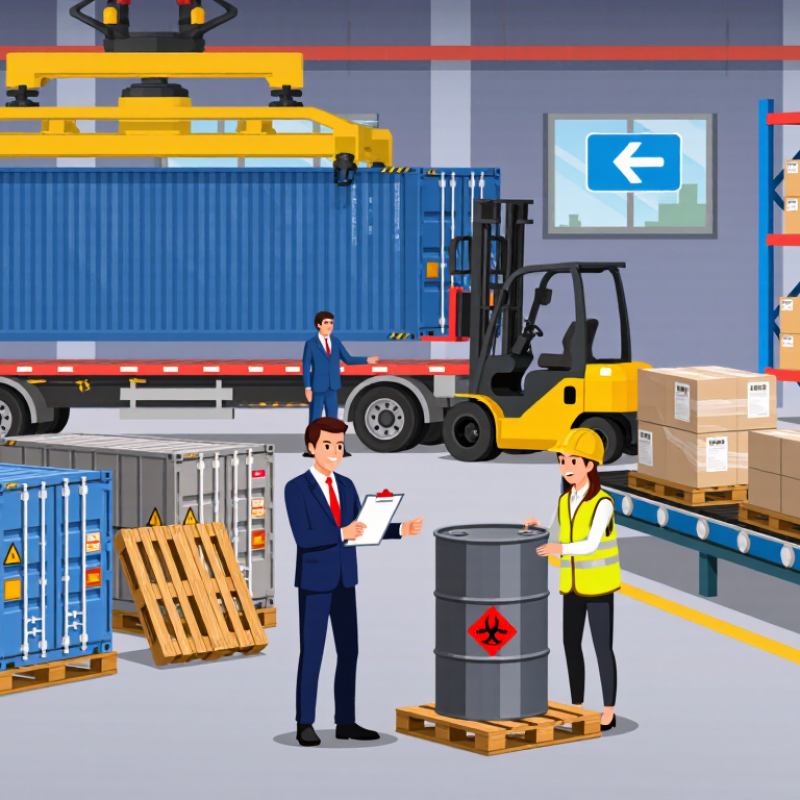
Accurate classification is the starting point for every dangerous goods shipment from China. Review the product’s Safety Data Sheet, technical name, ingredients, and physical condition. Do not rely on a sales description alone. A liquid, powder, or battery may require different controls. Confirm the proper shipping name, UN number, hazard class, and packing group. These details determine packaging, labels, documents, and transport options.
Check the rules for the chosen transport mode. Air, sea, road, and rail shipments may follow different requirements. Some products need tested packaging, inner containers, absorbent materials, or temperature control. The outer package must show the correct hazard labels and handling marks. Prepare the declaration, commercial invoice, packing list, and emergency contact details carefully. One missing field can delay cargo at the warehouse.
Small errors matter. In practical reviews, teams sometimes copy an old classification without checking a revised formula. That habit is risky. Ask a qualified dangerous goods professional to verify the documents and packaging instructions. Confirm that the shipper, carrier, and receiving facility accept the classification before pickup. Keep photographs of the packed cartons and inspection records. A second review may feel slow, but it can expose unclear wording or mismatched quantities. Requirements also change, so shipment data should be checked before every booking.
Managing dangerous goods shipments from China begins with accurate data, not a hurried booking. Confirm the product’s technical name, UN number, transport class, packing group, and physical state. The safety data sheet should match the actual formulation and current requirements. Check Sections 2, 9, 14, and 16 carefully. Small differences in flash point or concentration can change the shipping declaration. Ask the manufacturer to confirm the latest revision date. Old documents create avoidable delays.
Prepare the dangerous goods declaration, commercial invoice, packing list, and transport instructions as one consistent set. Use the same product description, quantity, package count, and consignee details everywhere. Packaging must suit the material and transport mode. Inspect closures, absorbent material, inner containers, and outer marks before handover. Labels should be clear and durable. Take photos of sealed packages and documents. They support traceability, but cannot replace inspection or certification. Requirements may differ between transport modes and destination countries. Verify them with a qualified professional and the carrier.
Tips: Build a document checklist for every shipment. Have a trained person review it before pickup. Recheck after any formulation, package, or route change. A rushed review is rarely efficient. Keep readable copies accessible to handlers and emergency responders. If information conflicts, stop the shipment and correct the source document first. That pause may feel inconvenient, but guessing is riskier.
China’s export network moves through factories, airports, ports, and distribution centers. UNCTAD’s Review of Maritime Transport 2024 states that maritime shipping carries over 80% of global merchandise trade by volume. One packaging mistake can therefore travel far.
Select packaging certified for the assigned UN number and packing group. Check material compatibility, closure strength, and cushioning. For liquids, inspect the inner container and add suitable absorbent material when required.
Use correct marks, hazard labels, shipping names, and emergency contact details. Air shipments must follow the current ICAO Technical Instructions and IATA Dangerous Goods Regulations. Sea shipments require the IMDG Code. Rules differ by transport mode.
Tips:
Photograph each package before handover. Keep the photos with the shipper’s declaration and inspection record. Small details matter. A rushed label check is tempting, but it creates avoidable delays. Recheck damaged cartons, blurred marks, and missing orientation arrows. This step is often neglected.
Handling staff need clear procedures, not assumptions. Separate incompatible substances during storage and loading. Keep packages upright when required. Do not place heavy freight on fragile dangerous goods.
Train workers to recognize leaks, swelling, heat, or unusual odors. Stop handling immediately and follow the approved emergency plan.
The International Maritime Organization’s 2024 safety guidance emphasizes documented procedures, competent personnel, and accurate cargo information. I still find that teams overtrust paperwork. Documents cannot repair a weak carton.
Review the shipment at three points: packing, warehouse receipt, and carrier handover. Record every correction. Consistency is the real control.
Managing dangerous goods shipments from China begins with carrier selection, not rate comparison. Choose a carrier with current authorization, trained staff, and documented incident procedures. Ask for licenses, safety records, insurance coverage, and experience with the cargo classification. A low quote can hide inspection delays, storage fees, or rejected bookings. I have seen schedules fail when teams trusted a familiar forwarder without checking current approvals. That mistake is avoidable.
Confirm the transport route before packing. Air, sea, rail, road, and border gateways may impose different limits on quantities, packaging, labels, and documents. Request written confirmation from the carrier and every planned transfer point. Compare the product classification, UN identification number, safety data sheet, packing instruction, and emergency contacts. Check airport closures, port rules, seasonal weather, tunnel restrictions, and customs requirements. One overlooked transfer can disrupt the entire journey. Keep a route file with approval emails and revision dates.
Use packaging tested for the selected transport mode and inspect every package before handover. Photograph labels, seals, and package condition. A second review catches errors that rushed teams miss. The shipper, carrier, and consignee should share identical documents. Do not assume a route remains approved after a schedule change. Reconfirm it when the vessel, flight, border, or package quantity changes. My own process still needs improvement: written checks help, but teams sometimes record them too late. Build a clear sign-off step before the cargo leaves the warehouse.
| Planning Dimension | Realistic Shipment Data | Carrier and Route Verification | Required Action Before Booking |
|---|---|---|---|
| Product Identification | Every regulated substance must be classified by its applicable UN number, Proper Shipping Name, hazard class or division, packing group where applicable, and any subsidiary risk. | Confirm that the carrier’s quotation and booking system uses the same classification as the current Safety Data Sheet, especially Section 14. | Provide the latest SDS, technical product name, concentration, physical state, quantity, package type, and intended transport mode. |
| Class 1: Explosives | Includes explosives and pyrotechnic articles. Classification may include divisions such as 1.1, 1.4, or 1.4S, depending on the approved product classification. | Many ports, airports, vessels, highways, tunnels, and storage areas restrict or prohibit explosive cargo. Transit permissions may be required. | Obtain the competent-authority approvals, packaging approval, route clearance, and carrier acceptance before cargo is delivered. |
| Class 2: Gases | Includes flammable gases, non-flammable and non-toxic gases, and toxic gases. Gas cylinders must be approved for the relevant filling and transport conditions. | Check cylinder certification, valve protection, temperature controls, segregation rules, and restrictions on tunnels, ferries, airports, and enclosed areas. | Confirm cylinder test dates, filling ratio, leak-free condition, labels, marks, and the applicable packing instruction. |
| Class 3: Flammable Liquids | Includes liquids with a flash point of not more than 60°C under the relevant transport classification method. Common examples include certain solvents, coatings, and chemical mixtures. | Verify the packing group, flash point, container compatibility, ventilation requirements, and restrictions on high-temperature or mixed cargo routes. | Use approved packaging, secure closures against leakage, apply the Class 3 label, and confirm the carrier accepts the exact UN entry. |
| Classes 4 and 5 | Class 4 covers flammable solids, spontaneously combustible substances, and substances that emit flammable gas when wet. Class 5 covers oxidizers and organic peroxides. | Segregation from incompatible cargo is critical. Oxidizers and organic peroxides may be subject to strict quantity, temperature, and stowage controls. | Check compatibility, control temperature where required, prevent moisture exposure for water-reactive materials, and obtain written carrier acceptance. |
| Classes 6 and 8 | Class 6 includes toxic substances and infectious substances. Class 8 includes corrosive substances such as acids and alkalis. | Review exposure risks, emergency response procedures, packaging performance, segregation from food or incompatible chemicals, and handling capability at every transfer point. | Use the correct packing instruction, verify inner and outer packaging, protect against leakage, and provide emergency contact information where required. |
| Class 7: Radioactive Material | Radioactive material is controlled according to the type of material, activity level, package category, transport index, and applicable radioactive-material regulations. | Carriers, airports, ports, and border authorities may require advance approval, specialized handling, security controls, or route-specific authorization. | Confirm authorization from the relevant competent authorities, package certification, labeling, documentation, and trained personnel before dispatch. |
| Class 9: Miscellaneous Dangerous Goods | Includes environmentally hazardous substances, lithium batteries, elevated-temperature substances, and other regulated articles that do not fit Classes 1–8. | Restrictions vary significantly by product and mode. Lithium batteries may have additional state-of-charge, packaging, labeling, quantity, and aircraft restrictions. | Identify the exact UN number and packing instruction; do not describe the shipment only as “electronic goods” or “chemical samples.” |
| Transport Mode Rules | Sea shipments generally follow the IMDG Code; air shipments follow the applicable ICAO Technical Instructions and airline requirements; road transport follows the rules in the countries and regions along the route. | One shipment may pass through several legal regimes when moving by truck, rail, sea, or air. The strictest applicable restriction may determine the feasible route. | Ask the carrier to confirm the governing rules for export pickup, port or airport handling, main carriage, transshipment, import clearance, and final delivery. |
| China Export Documentation | Typical documents may include a dangerous-goods declaration, SDS, commercial invoice, packing list, export declaration data, transport document, and product or packaging certificates when required. | Document names and submission procedures can vary by port, airport, customs requirement, cargo class, and transport mode. | Match the UN number, Proper Shipping Name, class, packing group, quantity, package count, and emergency information across every document. |
| Packaging Compliance | Many dangerous goods require UN-specification packaging tested for the relevant packing group. Some articles use special packaging instructions or limited-quantity provisions. | Check whether the packaging approval covers the actual substance, inner packaging, net quantity, closure method, and transport mode. | Inspect packages for damage, leakage, deformation, missing marks, and incorrect labels before the cargo enters the carrier’s network. |
| Carrier Qualification | A qualified carrier should have authorization, trained personnel, documented dangerous-goods procedures, suitable equipment, incident controls, and experience with the required mode. | Request evidence of applicable operating permits, dangerous-goods training records, insurance coverage, emergency response capability, and subcontractor controls. | Use a written carrier questionnaire and reject providers that cannot explain acceptance procedures, escalation contacts, or incident reporting processes. |
| Route Restrictions in China | Restrictions may apply to urban roads, tunnels, bridges, ferries, port access roads, railway terminals, airports, and areas with temporary traffic controls. | Routes can change because of public holidays, severe weather, construction, security events, local traffic rules, or temporary hazardous-cargo bans. | Obtain route confirmation shortly before pickup and verify permitted delivery windows, parking limitations, escort requirements, and alternative routes. |
| Port and Airport Acceptance | Ports and airports may impose cargo cut-off times, pre-notification requirements, acceptance windows, quantity limits, or restrictions on particular UN numbers. | Carrier booking confirmation alone may not guarantee terminal or airline acceptance. Acceptance can be withdrawn after document or package inspection. | Receive written acceptance before dispatch and allow additional time for inspection, declaration review, relabeling, or repacking. |
| Segregation and Compatibility | Incompatible dangerous goods may need separation during storage and transport. Examples include oxidizers separated from flammable materials and acids separated from alkalis. | Review the applicable segregation tables for the selected mode, container, vehicle, terminal, and voyage or flight. | Provide a complete cargo list to the carrier so mixed loads can be checked before consolidation or container loading. |
| Temperature and Environmental Control | Some substances require protection from heat, freezing, sunlight, moisture, pressure changes, or ignition sources. | Confirm whether the carrier can maintain the required temperature range and whether the route includes uncontrolled storage or long transfer periods. | Define temperature limits, monitoring method, alarm procedure, and action to take after a temperature excursion. |
| Emergency Preparedness | A shipment should have accurate emergency contact details, response instructions, spill or fire information, and an incident escalation process. | Check whether the carrier operates a 24-hour emergency contact system and has procedures for leakage, fire, loss, delay, or damaged packaging. | Place required emergency information with the transport documents and make sure the driver, warehouse, terminal, and consignee can access it. |
| Final Pre-Dispatch Checklist | Key data should agree across the SDS, declaration, labels, package marks, invoice, packing list, booking, and transport document. | Any mismatch can cause cargo rejection, customs delay, repacking, penalties, or a route change. | Complete a four-point check: correct classification, compliant packaging, qualified carrier, and confirmed route and terminal acceptance. |
How to Manage Dangerous Goods Shipments from China?
Tracking dangerous goods from China requires more than checking a container location. Build a milestone log for classification, packaging, inspection, port acceptance, loading, and delivery. Record each scan, seal number, package photograph, and temperature reading. A clean dashboard can still be wrong. In practice, missing handover data often creates more risk than a delayed vessel. The World Bank’s 2023 Logistics Performance Index found that only about 60% of international shipments arrived within their scheduled time. Plan buffer time around port cutoffs and connecting transport.
When delays occur, separate safety decisions from commercial pressure. Confirm the UN number, proper shipping name, packing group, labels, marks, and transport documents against the approved shipment file. Never release a questionable package because the truck is waiting. Ask the carrier or qualified dangerous goods adviser to review discrepancies. The International Maritime Organization’s IMDG Code and the International Civil Aviation Organization’s technical instructions provide the operating framework for sea and air movements. Requirements can differ by transport mode.
For incidents, preserve evidence first: photographs, sensor records, loading instructions, and communication logs. Isolate damaged packages only under trained procedures and local emergency guidance. Report the event through the designated carrier and regulatory channels. UNCTAD’s Review of Maritime Transport 2024 reported 2.4% growth in maritime trade during 2023, while rerouting increased voyage times in several corridors. More movement means more handoffs. That is where simple controls sometimes fail. Review them honestly after every shipment.
Track the shipment and manage delays, incidents, or regulatory issues by identifying the applicable UN dangerous goods class and its subdivisions before booking, labeling, documentation, and transport.
What the chart shows: UN dangerous goods classes 1, 2, 4, 5, and 6 contain multiple subdivisions, which can require different packaging, labels, handling procedures, and transport documents. Confirm the classification, packing instruction, marks, labels, and carrier acceptance requirements before dispatch. The applicable requirements may differ between road, sea, rail, and air transport.
Confirm the technical name, UN number, transport class, packing group, and physical state. Small errors matter. Check the latest safety data sheet revision before booking.
Review Sections 2, 9, 14, and 16 carefully. Compare flash point, concentration, formulation, and transport details with the actual product. Old documents can cause delays.
The dangerous goods declaration, commercial invoice, packing list, and transport instructions should agree. Use identical descriptions, quantities, package counts, and consignee details. One conflict can stop the shipment.
Check closures, absorbent material, inner containers, outer marks, and label condition. Labels must remain clear and durable. Photograph sealed packages and documents for traceability.
Choose a carrier with current authorization, trained staff, insurance, and incident procedures. Ask about experience with the cargo classification. A cheap quote may hide storage fees or rejected bookings.
Air, sea, rail, road, and border gateways may have different requirements. Confirm quantity limits, packaging rules, labels, documents, and transfer conditions in writing. One overlooked transfer can disrupt the journey.
Reconfirm approval after changing the vessel, flight, border, package quantity, or schedule. Rules may change. Keep approval emails and revision dates in a route file.
Stop the shipment and correct the original document first. Do not guess. A trained person should review the complete checklist before pickup. My process is not perfect, so late sign-offs need attention.
How to manage dangerous goods shipments from China begins with correctly identifying the goods, their hazard classification, and the transport requirements that apply to air, sea, road, or rail freight. Before shipping, prepare complete and accurate documentation, including the commercial invoice, packing details, transport declarations, and current safety data. All information should match the actual contents and clearly communicate the handling risks to every party involved.
The shipment must use packaging that is tested, suitable for the materials, and properly secured against leakage, damage, or movement. Required labels, marks, and handling instructions should be visible and accurate. Work only with qualified carriers and confirm route restrictions, transfer points, and destination requirements in advance. After dispatch, track the shipment closely and maintain a response plan for delays, damaged packages, documentation problems, or regulatory questions. Careful coordination, transparent communication, and timely corrective action help ensure a safe, compliant, and efficient delivery process.
NoviLink Logistics