Top 10 Reasons Why Cross Border E Commerce Shipping Is Hard?

Time:2026-09-16 Author:Ethan
0%

Why cross-border e-commerce shipping is challenging is not a single problem. It is a chain of small decisions, delays, and costs. A parcel may leave Shenzhen, transfer through Dubai, enter Germany, and reach a customer after several handovers. Each handover creates risk.

DHL’s 2024 E-Commerce Trends Report identifies delivery choices, tracking, and returns as major influences on online purchase decisions. Its findings reflect a practical reality: customers compare shipping promises before they compare product features. The International Post Corporation’s Cross-Border E-Commerce Shopper Survey also highlights delivery cost, delivery speed, and reliability as persistent concerns. These pressures become sharper across borders, where duties, taxes, address formats, carrier systems, and local expectations differ. A low-cost shipping label can become expensive after storage, failed delivery, or a return journey.

Tobias Meyer, CEO of DHL Group, has described logistics as “the backbone of global trade.” That sentence is simple, but it explains the operational burden clearly. Shipping is not merely transportation. It is data accuracy, inventory planning, customs documentation, customer communication, and service recovery. One missing apartment number can stop a parcel. One unclear tax message can destroy trust.

The uncomfortable part is that many brands still treat international shipping as a checkout feature. It is not. It is a customer experience system. Costs are often underestimated, and delivery promises can be too confident. This guide examines the Top 10 Reasons Why Cross Border E Commerce Shipping Is Hard, using industry evidence and practical logistics realities. Some solutions will work. Others may need reconsideration.
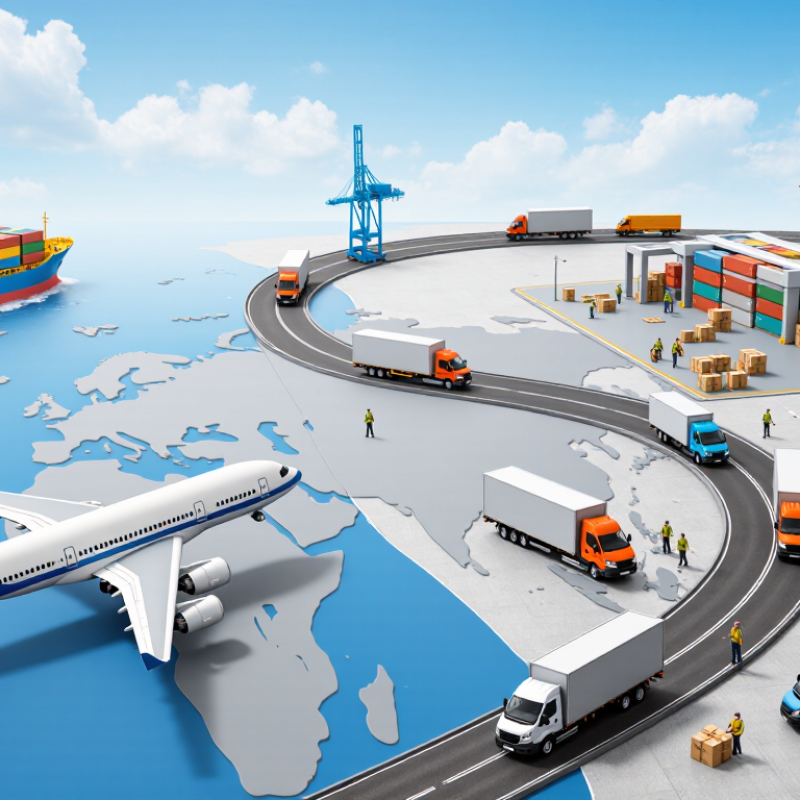
Top 10 Reasons Why Cross Border E Commerce Shipping Is Hard?

What Cross-Border E-Commerce Shipping Involves

Top 10 Reasons Why Cross Border E Commerce Shipping Is Hard?

What Cross-Border E-Commerce Shipping Involves

Cross-border shipping is not simply moving a parcel overseas. It connects product data, payment checks, customs documents, transport networks, and local delivery. The International Post Corporation’s Cross-Border E-Commerce Shopper Survey 2023 found that 63% of online shoppers bought from foreign websites. That demand creates pressure for accurate and predictable fulfillment.

A typical order begins with a complete address, correct product description, declared value, and suitable tariff classification. Then, the parcel may pass through export screening, customs assessment, international transport, and local handoff. One missing apartment number can delay delivery. One incorrect weight can change the shipping charge. Tracking may also become less detailed after the border transfer. Small gaps matter.

The World Bank’s Logistics Performance Index 2023 compared 139 economies across customs, infrastructure, and delivery reliability. These differences explain why one route feels smooth while another requires extra days. Returns add another layer, including reverse transport, duty treatment, inspection, and customer communication. A perfect workflow is rare. Shipping teams still need to review failed deliveries, unclear fees, and damaged packaging. The practical lesson is uncomfortable: lower cost does not always mean better cross-border performance.

Top Reasons Why Cross-Border E-Commerce Shipping Is Hard

Cross-border shipping depends on customs, transport infrastructure, international shipment availability, logistics expertise, tracking, and delivery reliability. The chart uses the World Bank’s 2023 Logistics Performance Index global scores. Scores range from 1 to 5; lower scores indicate greater operational friction.

Source: World Bank, Logistics Performance Index 2023. Global average scores are shown for the six measured logistics dimensions.

How International Regulations Complicate Shipment Processing

Top 10 Reasons Why Cross-Border E-Commerce Shipping Is Hard?

How International Regulations Complicate Shipment Processing

A parcel can cross several legal systems before reaching one doorstep. Each system may require different commodity codes, tax rules, invoices, and electronic data. A small description mismatch can trigger manual review. It can also create storage costs and customer-facing delays. The World Bank’s 2023 Logistics Performance Index found that only 57% of shipments reached destinations within expected time. That figure exposes a practical gap between policy and warehouse reality. Not every delay reflects poor logistics.

Customs authorities increasingly expect advance electronic data, but data fields are not globally uniform. The World Customs Organization’s Cross-Border E-Commerce Framework of Standards emphasizes accurate, timely, and complete information. In practice, a seller may know the product, yet miss its material, intended use, or origin details. Those gaps affect classification, valuation, duty calculation, and simplified-clearance eligibility. The OECD’s 2022 Trade Facilitation Indicators estimated that full implementation could reduce trade costs by 14.3% on average. The opportunity is substantial.

However, compliance is not a one-time setup. Rules change, templates update, and carriers interpret exceptions differently. Automation helps, but it can repeat a wrong assumption at scale. That is the uncomfortable part. Reliable teams maintain product data, version-controlled invoices, and human review procedures. They also measure clearance holds by country, category, and error type. These records reveal whether regulation, training, or weak data quality causes recurring delays.

Why Customs, Duties, and Taxes Create Delivery Uncertainty

Top 10 Reasons Why Cross Border E Commerce Shipping Is Hard?

A parcel can leave a warehouse with a correct label and still face delays at the border. Customs officers review product descriptions, declared values, country of origin, and tariff codes. Small wording differences can change the classification. That affects duty rates. It also affects release times.

Duties and taxes create uncertainty because the final cost may not be known at checkout. A shipment valued at 80 dollars could attract different charges after customs reviews its materials or intended use. The carrier may request payment before delivery. If the buyer refuses, storage fees can grow while the parcel waits. Nobody enjoys that surprise.

Experienced logistics teams reduce risk by checking tariff codes, keeping commercial invoices consistent, and explaining possible charges clearly. They also monitor destination rules because regulations and tax thresholds can change. Still, no process is perfect. I have seen careful documentation questioned because one product name sounded too broad. A better description helped, but the delay remained. Reliable shipping requires communication between sellers, carriers, customs specialists, and buyers, especially when an estimated tax becomes an unexpected payment.

How Distance, Infrastructure, and Carriers Affect Shipping Speed

Cross-border shipping becomes difficult long before a parcel leaves the warehouse. Distance stretches transit time and increases the number of handoffs. A package may travel by truck, aircraft, and local delivery vehicle. Each transfer creates another chance for delay or damage. Weather and time-zone differences add pressure to tight schedules. Small errors become expensive over greater distances.

Infrastructure matters just as much. A major city may offer daily departures, reliable roads, and automated sorting. A rural destination may depend on fewer routes and manual processing. Address formats can vary, causing parcels to pause for clarification. Tracking may update only after a shipment reaches the next facility. That silence worries customers, even when the parcel is moving. From shipping operations, I have seen delivery estimates look more precise than reality.

Carriers affect speed through route coverage, capacity, and service design. Some prioritize low cost, while others reserve space for urgent shipments. During seasonal peaks, aircraft space and warehouse labor can shrink quickly. Faster service may still face regional delivery delays. That part is often overlooked. Businesses should compare actual delivery records, not only advertised targets. They should test several destinations before making broad promises. One successful shipment proves little. Even experienced teams misjudge remote-area performance.

Why Returns, Tracking, and Customer Service Are Difficult Globally

Top 10 Reasons Why Cross Border E Commerce Shipping Is Hard?

Why Returns, Tracking, and Customer Service Are Difficult Globally

Cross-border shipping becomes difficult after the parcel leaves the seller’s warehouse. Tracking updates may pause during customs review or local handoffs. Customers often see “in transit” for several days. That phrase creates anxiety, especially when delivery estimates already feel uncertain. In my experience, unclear ownership causes more frustration than a small delay. A perfect process is unrealistic.

Returns create deeper operational problems. A customer may need a local return address, clear instructions, and a prepaid label. Duties, damaged packaging, and incomplete product information can complicate the process. Customer service teams also face language differences, time zones, and changing delivery rules. A polite reply is not enough when the customer wants a specific next step. We should examine this weakness honestly.

Tips: Set realistic delivery windows and explain possible tracking gaps before checkout. Use simple return instructions with photos or examples. Provide one clear contact channel and record every case carefully. Send proactive updates when a parcel misses a scan. Measure resolution time, not only response speed. Small details matter.

Top 10 Reasons Why Cross Border E Commerce Shipping Is Hard? - Why Returns, Tracking, and Customer Service Are Difficult Globally
No. Global Shipping Challenge Relevant Data Dimension Why It Is Difficult Across Borders Practical Operational Approach
1 Customs Documentation and Classification Data Point
The international Harmonized System uses six-digit product codes, while individual customs authorities may add further national subdivisions.
A product can require different descriptions, tariff classifications, country-of-origin details, and supporting documents depending on the destination. Incorrect or incomplete data may lead to inspections, delays, reassessment, or rejection. Maintain a structured product database containing HS codes, product descriptions, materials, declared values, origin information, and restricted-goods indicators.
2 Duties, Taxes, and Import Rules Data Point
Import charges depend on destination, product classification, customs value, origin, tax rules, and applicable de minimis thresholds.
The final landed cost may not be known from the product price alone. Customers may refuse delivery when unexpected charges are requested, creating failed deliveries, disputes, or returns. Display an estimated landed cost where possible, identify whether charges are prepaid or collected on delivery, and provide clear tax and duty explanations during checkout.
3 Unreliable End-to-End Tracking Data Point
A cross-border parcel commonly passes through several transport and customs handoff points before final delivery.
Tracking events may be delayed, translated inconsistently, or unavailable during handoffs between postal, express, customs, and last-mile networks. A shipment can therefore be moving even when no new scan is visible. Normalize tracking statuses into simple milestones such as accepted, exported, in customs, released, out for delivery, delivered, and exception.
4 Long and Variable Delivery Times Data Point
Delivery time includes origin handling, line-haul transport, customs processing, local transfer, and final-mile delivery.
The same service level can experience different transit times because of customs inspections, weather, public holidays, capacity constraints, address quality, and local delivery conditions. Use destination-specific delivery windows rather than a single global promise, and separate normal transit time from possible customs or exception time.
5 Complex International Returns Data Point
A return can require a reverse label, export documentation, import treatment, inspection, refund approval, and inventory disposition.
The reverse journey is often more complicated than the original shipment. The returned item may cross borders again, incur additional transport costs, or become difficult to resell because packaging and customs records no longer match. Publish country-specific return rules, provide localized instructions, consolidate returns where lawful, and define clear conditions for refund, replacement, repair, and restocking.
6 Different Consumer Protection Requirements Data Point
Some jurisdictions provide statutory cancellation or withdrawal rights for distance purchases; for example, the European Union generally provides a 14-calendar-day withdrawal period for many online consumer purchases, subject to exceptions.
Return windows, refund timing, warranty obligations, disclosure rules, and acceptable cancellation reasons vary by jurisdiction. A single global policy may conflict with local legal requirements. Maintain destination-based policy rules and ensure checkout, order confirmation, return instructions, and refund workflows reflect the customer’s applicable rights.
7 Address and Delivery-Point Variations Data Point
Address formats, postal-code structures, apartment conventions, transliteration practices, and access instructions differ substantially between countries.
A technically valid address may still be insufficient for local delivery. Missing building numbers, locality names, phone numbers, or access details can cause failed attempts and additional handling. Apply country-specific address validation, request local contact details when appropriate, support regional scripts, and allow customers to confirm formatted addresses before payment.
8 Time Zones, Languages, and Customer Support Coverage Data Point
International operations span up to 24 primary time-zone offsets and require communication across multiple languages and cultural expectations.
A customer may contact support while the fulfillment team, carrier, or customs broker is offline. Literal translations can also create confusion about delivery dates, fees, return rights, or required actions. Provide localized help content, multilingual templates, clear time-zone references, automated status updates, and escalation coverage for urgent customs and delivery exceptions.
9 Restricted, Regulated, or Prohibited Goods Data Point
Restrictions may apply to batteries, liquids, medicines, food, cosmetics, plants, animal products, chemicals, and other controlled categories.
A product that is legal for sale in one market may require permits, special packaging, labeling, or carrier approval in another. Non-compliant shipments may be delayed, destroyed, returned, or subject to penalties. Screen products and destinations before checkout, maintain regulatory attributes, validate packaging requirements, and block unsupported combinations automatically.
10 Currency, Pricing, and Refund Reconciliation Data Point
International orders may involve different currencies, exchange rates, payment methods, tax treatments, shipping fees, and refund values.
Exchange-rate changes, partial refunds, duty adjustments, payment reversals, and cross-border settlement timing can cause differences between the amount paid and the amount ultimately refunded. Record transaction and settlement currencies separately, show refund calculations clearly, retain order-time exchange-rate data, and reconcile shipping, tax, duty, and payment adjustments at order level.

FAQS

What does cross-border e-commerce shipping involve?

It connects product details, payment checks, customs documents, transport, and local delivery. One missing apartment number can delay the parcel. Small gaps matter.

Which information must an international shipment include?

It needs a complete address, accurate product description, declared value, weight, and tariff classification. An incorrect weight may change the shipping charge.

Why can delivery times vary between destinations?

Distance, road quality, airport capacity, and local delivery routes all affect speed. Rural areas may have fewer transport options. Estimates can look more precise than reality.

Why does tracking sometimes stop updating?

Tracking may pause during customs review or local handoffs. Customers might see “in transit” for several days. That silence feels worse than a small delay.

How do seasonal peaks affect international delivery?

Aircraft space and warehouse labor can become limited during busy periods. Delays may appear even with faster services. One successful shipment proves little.

Why are returns harder across borders?

Returns may require a local address, clear instructions, and a prepaid label. Duties, damaged boxes, and incomplete product details can complicate inspection.

How should businesses communicate delivery delays?

Set realistic delivery windows before checkout. Explain possible tracking gaps clearly. Send a proactive message when a parcel misses a scan.

What makes global customer service difficult?

Teams manage language differences, time zones, and changing delivery procedures. A polite reply is not enough. Customers need one clear next step.

How can shipping performance be improved?

Compare actual delivery records, not only advertised targets. Test several destinations, including remote areas. Review failed deliveries, unclear fees, and damaged packaging honestly.

Conclusion

Why cross-border e-commerce shipping is challenging becomes clear when a package must move through multiple countries, transportation networks, and administrative systems. International orders involve more than simply sending goods from one location to another. Each destination may apply different documentation standards, import procedures, duties, and taxes, creating uncertainty in processing time and final delivery costs. Customs inspections or incomplete information can also cause unexpected delays.

Distance, limited infrastructure, weather conditions, and differences between local carriers can make delivery speed difficult to predict. Tracking information may not update consistently when a shipment changes hands, leaving customers unsure about its progress. Returns are even more complicated because reverse shipping, refunds, address verification, and local service procedures must be coordinated across borders. In addition, customer support teams may need to handle different languages, time zones, and expectations. Together, these factors make cross-border fulfillment more difficult to manage than domestic shipping and require careful planning, clear communication, and flexible logistics processes.

Ethan

Ethan

Ethan is a seasoned marketing professional with a deep expertise in our company's innovative product line. With a passion for sharing knowledge and insights, he takes the lead in regularly updating our corporate blog, where he explores industry trends, product features, and effective marketing......