 NoviLink Logistics
Featured LCL Solutions for Dubai & GCC
Direct routes, optimized pricing, and dedicated consolidation lines
Corporate Profile: Decades of Logistics Expertise
Shenzhen NoviLink Logistics Co., Ltd. is a leading global logistics provider specializing in airfreight, sea freight, and both LCL and FCL shipping solutions. Founded in 2010 in Shenzhen, China, NoviLink began as a small freight forwarding company focused on cross-border e-commerce shipments. Over the past decade, the company has grown into a full-service logistics and supply chain expert, serving clients across Asia, Europe, and North America under its flagship brand NoviLink.
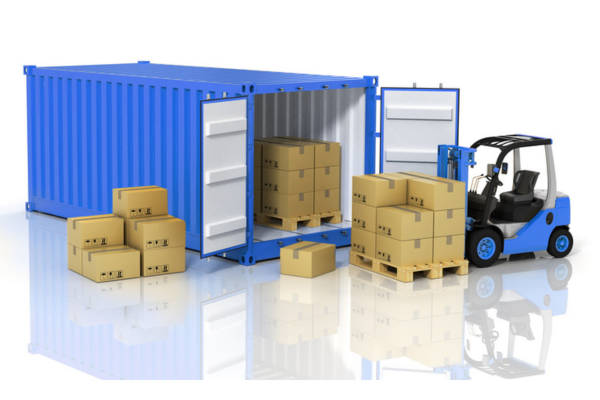
From its early days of handling small-scale shipments, NoviLink quickly expanded its operations to include express air cargo, ocean freight, customs clearance, and multi-modal transportation. By integrating cutting-edge logistics management systems, warehouse automation, and real-time tracking, the company provides seamless, reliable, and cost-effective shipping solutions tailored to both businesses and e-commerce sellers.
NoviLink’s service portfolio now covers cold chain logistics, inventory management, last-mile delivery, and freight insurance, ensuring goods are transported safely and efficiently worldwide. The company’s dedicated team of logistics professionals combines decades of experience with innovative supply chain strategies, helping clients optimize shipping routes, reduce costs, and improve overall operational efficiency.

Committed to sustainability, efficiency, and customer satisfaction, Shenzhen NoviLink Logistics Co., Ltd. continues to set industry standards for global freight solutions. Through its comprehensive air and sea freight services, NoviLink empowers businesses to expand internationally, delivering excellence at every step of the supply chain.
The Strategic Role of Dubai in Global LCL Maritime Networks
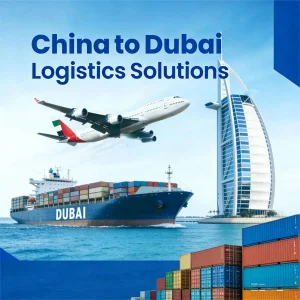
Dubai occupies a unique geostrategic position as the economic heart of the Middle East and a primary global transit hub linking East-West trade lanes. Strategically anchored by the Port of Jebel Ali—the largest marine terminal in the Middle East and among the top ten busiest ports globally—Dubai operates as a critical Gateway to the GCC (Gulf Cooperation Council), the wider Middle East, Africa, and the Indian subcontinent.
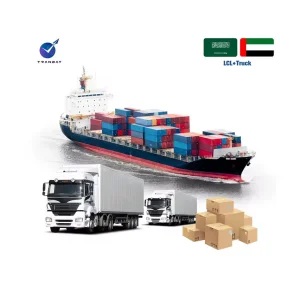
For international manufacturers and exporters, utilizing Less Than Container Load (LCL) shipping to Dubai represents a highly agile approach to inventory control and supply chain rationalization. Rather than waiting to compile full container volumes (FCL), shippers can co-load smaller consignments, thus accelerating transit speed, preserving capital, and minimizing storage overheads in local Free Zones like JAFZA (Jebel Ali Free Zone) and DAFZA (Dubai Airport Free Zone).
Industry Trends: Decarbonization, Digitalization, and Consolidation Hubs
The contemporary maritime sector is experiencing a massive paradigm shift. Shippers are facing stricter environmental regulations under the IMO (International Maritime Organization) 2023/2024 decarbonization mandates. LCL cargo optimization has emerged as a practical method to reduce scope 3 emissions by maximizing the volumetric utilization of active ocean containers, effectively reducing the carbon footprint per unit weight of freight.
Simultaneously, the convergence of AI and supply chain execution has made predictive scheduling, automated load planning, and multi-carrier integration standard expectations. Modern consolidation facilities utilize 3D spatial algorithms to map physical arrangements within a dry van, maximizing space utilization and preventing structural damage to sensitive freight.
Global Expansion & Transit Corridors
Broadening your commercial footprint with secure ocean freight forwarding
Operational Flow: The Lifecycle of an LCL Consignment
LCL operations require significantly higher coordination and data precision than FCL. A minor mismatch in cargo measurements, classification, or customs declaration can delay an entire container. NoviLink executes a rigorous, quality-assured multi-stage handling workflow:
Origin Receipt & Volumetric Verification
Cargo is received at our secure CFS (Container Freight Station) in Shenzhen or Ningbo. Each package undergoes weight verification, physical dimension scanning, and structural integrity checks.
Export Customs Clearance & Packing
Cargo classification (HS Codes validation) is performed to prepare documentation. Products are safely packed inside the container using advanced palletization and securing mechanisms.
Ocean Transit & Fleet Tracking
The consolidated container is loaded onto primary ocean liners. Real-time satellite tracking monitors progress along the maritime transit path to Dubai.
Destination De-consolidation & Local Delivery
Upon arrival at Jebel Ali Port, the container is transferred to the CFS for stripping (de-consolidation). After clearing UAE customs, individual consignments are dispatched for final destination delivery.
Understanding Incoterms: DDP vs. DDU vs. FOB in Dubai Imports
Selecting appropriate Incoterms is critical for determining liability, transit costs, and clearance efficiency. The table below outlines the primary differences under UAE importing rules:
| Incoterm | Origin Costs (China) | Ocean Freight | Dubai Port Handling | Dubai Customs Clearance | Final Delivery (UAE) |
|---|---|---|---|---|---|
| FOB (Free on Board) | Paid by Shipper | Paid by Consignee | Paid by Consignee | Paid by Consignee | Paid by Consignee |
| DDU (Delivered Duty Unpaid) | Paid by Shipper | Paid by Shipper | Paid by Shipper | Cleared by Buyer | Paid by Shipper |
| DDP (Delivered Duty Paid) | Paid by Shipper | Paid by Shipper | Paid by Shipper | Paid by Shipper | Paid by Shipper |
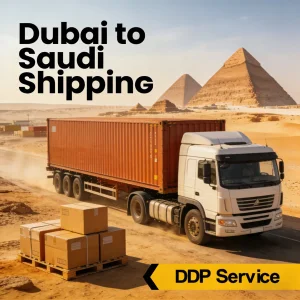
NoviLink operates robust DDP pathways directly to Dubai and Riyadh, coordinating import paperwork, customs duties, and municipal fees on behalf of overseas buyers to provide a seamless door-to-door logistics experience.
Our Comprehensive LCL and Logistics Portfolio
Global ocean freight solutions with optimized local customs handling
Frequently Asked Questions (FAQ)
Everything you need to know about LCL ocean freight and Dubai customs clearance